
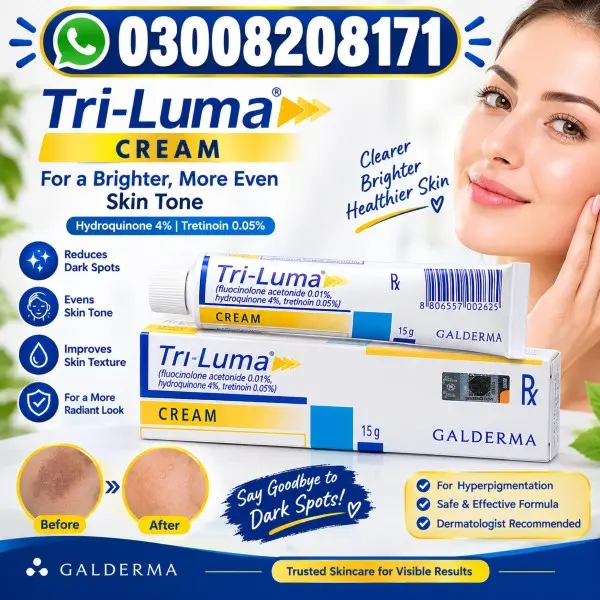
Tri-Luma Cream is a prescription skincare medication formulated with three active ingredients: fluocinolone acetonide 0.01%, hydroquinone 4%, and tretinoin 0.05%. This combination is indicated for the short-term treatment of moderate to severe melasma on the face.
The three ingredients work together to help reduce the appearance of melasma-related dark patches. Tri-Luma Cream should be used alongside sun-protection measures, including sunscreen and limiting sun exposure.
This cream is not intended for continuous, long-term maintenance use. A dermatologist can determine the appropriate treatment duration and recommend an alternative skincare routine once melasma is controlled.
Melasma treatment: Helps treat moderate to severe facial melasma.
Reduces dark patches: Hydroquinone helps reduce excess pigment production.
Supports skin renewal: Tretinoin helps promote the shedding of surface skin cells.
Anti-inflammatory action: Fluocinolone acetonide is a topical corticosteroid that helps reduce inflammation.
Triple-ingredient formula: Combines three active ingredients in one cream.
Targeted treatment: Designed for short-term use on affected facial areas.
Tri-Luma Cream combines three active ingredients that work through different mechanisms:
Hydroquinone 4%: Helps reduce melanin production, which contributes to the dark patches associated with melasma.
Tretinoin 0.05%: A retinoid that promotes skin-cell turnover and supports the penetration of the other active ingredients.
Fluocinolone acetonide 0.01%: A corticosteroid that helps reduce inflammation and irritation.
Together, these ingredients help improve the appearance of facial melasma during a prescribed course of treatment. Results vary, and melasma may return after treatment is stopped.
Use only as prescribed by a dermatologist. The official product instructions specify the following:
Gently wash your face and neck with a mild cleanser.
Rinse and pat the skin dry.
Apply a thin film to the affected melasma areas, following your doctor's instructions.
Apply once daily, at least 30 minutes before bedtime, if this matches your prescription.
During the day, use broad-spectrum sunscreen of at least SPF 30, wear protective clothing, and limit sun exposure.
Stop treatment when directed by your dermatologist. Do not use it continuously as a maintenance cream.
Check out other products you might love
 - 17%
- 17%
 - 29%
- 29%
 - 23%
- 23%
 - 33%
- 33%
 - 33%
- 33%
 - 29%
- 29%
 - 33%
- 33%
 - 37%
- 37%
 - 33%
- 33%
 - 23%
- 23%
 - 40%
- 40%
 - 33%
- 33%
 - 43%
- 43%
 - 33%
- 33%